
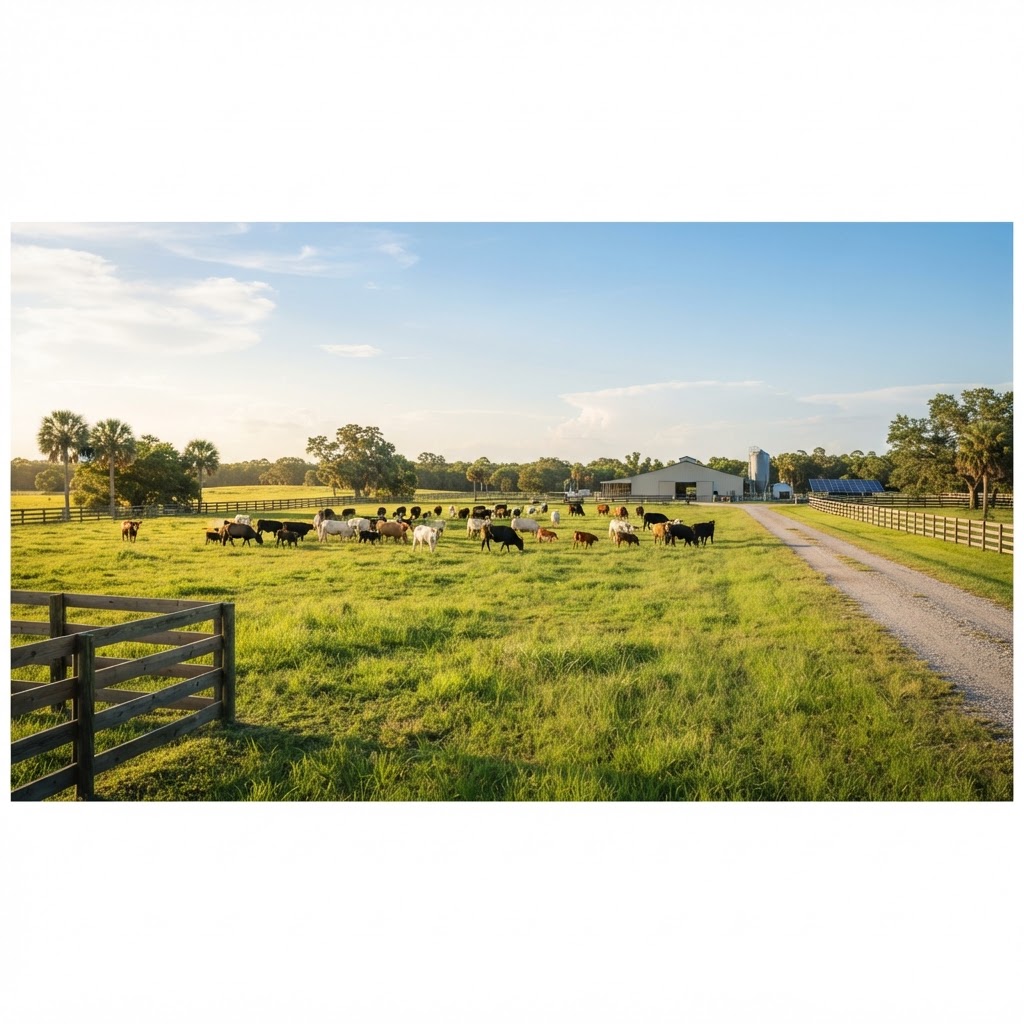

Florida livestock producers affected by prolonged drought may have more time to replace qualifying animals and defer recognition of certain gains. IRS Notice 2026-54 extends the replacement period under Internal Revenue Code Section 1033(e) for eligible taxpayers whose replacement deadline was scheduled to expire at the end of 2026. Every Florida county appears on the IRS drought list for the 12-month period ending August 31, 2026.
The relief can be valuable, but it is narrow. It applies to certain livestock sales caused by drought, not to every farm loss, livestock sale, or weather-related expense. Producers should review the facts of each sale and their original replacement deadline before relying on the extension.
What the IRS Relief Means
Section 1033 generally allows a taxpayer to postpone gain when property is involuntarily converted and qualifying replacement property is purchased within the required period. For livestock, the rules may treat certain drought-driven sales as involuntary conversions. Gain is generally recognized only to the extent the amount received exceeds the cost of qualifying replacement property purchased during the replacement period.
Normally, when the federal assistance requirement is met, the livestock replacement period ends four years after the close of the first tax year in which any part of the gain was realized. Notice 2026-54 keeps that window open longer for eligible taxpayers in regions where severe, extreme, or exceptional drought continued.
Who May Qualify
A sale or exchange may qualify only when all applicable requirements are satisfied. In general, the livestock must have been:
-
Livestock other than poultry
-
Held for draft, breeding, or dairy purposes
-
Sold or exchanged in a number greater than the producer would sell under normal business practices
-
Sold or exchanged solely because of drought or another qualifying weather-related condition
-
Located in an area designated by the federal government as eligible for assistance because of the weather-related condition
For the 2026 extension, the taxpayer must also have a Section 1033(e) replacement period that was otherwise scheduled to expire at the end of 2026. For a fiscal-year taxpayer, the relevant period is the taxable year that includes August 31, 2026.
All 67 Florida Counties are Included
IRS Notice 2026-54 has broad national reach, listing drought-affected counties across 49 states. Florida is the focus for local producers: all 67 counties are included for the 12-month period ending August 31, 2026. That period therefore is not considered a drought-free year for any applicable region that includes a Florida county.
The applicable region includes the county where the drought-related sale occurred and every county contiguous to it. Because every Florida county is listed, eligible Florida producers whose replacement periods were set to expire in 2026 should review whether the extension applies.
How Long Does the Extension Last
The IRS did not establish one new deadline for every producer. Instead, the replacement period continues until the end of the taxpayer's first taxable year ending after the first drought-free year for the applicable region.
For this purpose, a drought-free year is a 12-month period that:
-
Ends on August 31
-
Ends in or after the final year of the taxpayer's original four-year replacement period
-
Contains no week in which severe, extreme, or exceptional drought was reported anywhere in the applicable region
Even one qualifying week of drought in the county or a contiguous county can prevent that 12-month period from being drought-free. This means the actual replacement deadline may differ by taxpayer and region and may be extended again if qualifying drought conditions continue.
What Florida Producers Should Do Now
1. Confirm the original deadline. Identify the tax year in which the drought-related gain was first realized and confirm whether the four-year replacement period was scheduled to end in 2026.
2. Document why the animals were sold. Keep records showing the drought conditions, the federal assistance designation, the number and type of livestock sold, and how the sale exceeded normal business practices.
3. Review replacement plans and costs. Track qualifying replacement purchases and retain invoices, payment records, and documentation showing how the replacement property is related in service or use.
4. Coordinate the tax reporting. Section 1033 elections and basis calculations can affect current and future returns. Review the transaction with a qualified tax professional before filing or amending a return.
The Bottom Line
For eligible Florida livestock producers, Notice 2026-54 may provide more time to rebuild a herd after prolonged drought without losing the potential gain-deferral treatment under Section 1033(e). The relief is not automatic tax forgiveness, and the qualification rules are fact-specific. Producers should review livestock sale records, prior tax filings, and replacement plans now to determine whether the extension is available.
If you sold breeding, dairy, or draft livestock because of drought and your replacement period was set to end in 2026, contact our team. We can help confirm eligibility, the applicable deadline, and the documentation needed for your tax return.
Important Note
This article is for general informational purposes only and does not constitute tax, legal, or accounting advice. Eligibility depends on the taxpayer's specific facts, including the reason for the sale, the type and use of the livestock, the federal assistance designation, prior tax reporting, and the timing and cost of replacement property. Consult a qualified tax professional regarding your situation.
Have questions? We're here to help.
Reach out to Kamish & Associates — Tampa Bay's trusted CPA firm.
Zach Kamish
Kamish & Associates CPA Firm · Tampa Bay, FL